





Quality Assurance (QA) in the Doctoral Programmes of the University of Padua is implemented in accordance with the ANVUR AVA 3 framework and the requirements of Ministerial Decree 226/2021, which mandates accredited institutions to adopt a structured system for the design, management, monitoring, and continuous improvement of doctoral training. The primary goal is to ensure a high-quality educational and research environment that supports the development of the doctoral candidates’ scientific, professional, and transversal skills, in line with the European Standards and Guidelines for Quality Assurance in the European Higher Education Area (ESG). Within this framework, each Doctoral Programme adopts transparent procedures for defining learning objectives and expected outcomes, plans and organizes appropriate educational and research activities consistent with its mission, monitors progress and results, and implements evidence-based improvements. Active engagement of doctoral candidates, academic staff, and the Doctoral Board is a key component of the QA cycle, together with ongoing interaction with the University Quality Assurance Office, the Internal Evaluation Group and the relevant institutional bodies. Therefore, QA in the doctoral domain ensures rigorous and internationally recognisable training paths that fully respond to the needs of advanced research and society, supporting the continuous enhancement of the learning experience and the quality of the scientific outcomes produced.
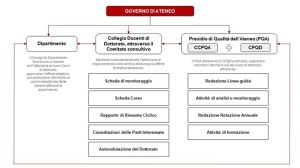
More information is available at the following links:
Quality Assurance for Doctoral Programs: HERE
DISSGEA – Departmental Quality Assurance: HERE
To access the documentation regarding the QA process for the PhD in Historical, Geographical, and Anthropological Studies, please visit the reserved area (access for Academic Board and Advisory Committe members only)
ADVISORY COMMITTEE
The Advisory Committee is a body appointed by the Academic Board (Collegio Docenti). Its purpose is to assist the Coordinator in establishing a balanced program of scientific and educational activities for the PhD program. This is achieved through consultation with social partners and through monitoring and review activities. Additionally, the Committee monitors the actions taken by the Directing Council and the Academic Board to address any issues that may arise.
The Advisory Committee thus plays a consulting and steering role regarding the educational project of the PhD program and the identification of career opportunities. This role is particularly significant during the launch of a new PhD project and within the framework of Monitoring and Review processes.
The Advisory Committee of the PhD in Historical, Geographical, and Anthropological Studies is chaired by the Coordinator, Prof. Giulia Albanese, and is composed as follows:
4 members of the Academic Board:
Prof. Gianmarco De Angelis, DiSSGeA, Padua
Prof. Flavia De Rubeis, DSU, Venice
Prof. Maria Cristina La Rocca, DiSSGeA, Padua
Prof. Anna Maria Rapetti, DSU, Venice
3 representatives of PhD students:
Dr. Elisa Furlan, 37th cycle
Dr. Simone Varriale, 37th cycle
Dr. Lisa Zecchin, 37th cycle
5 external stakeholders:
Prof. Massimiliano Bassetti, University of Bologna
Dr. Chiara Nozza Bielli, EBSCO Information Services
Dr. Monica Del Rio, State Archives of Venice
Dr. Livio Karrer, University of Padua Alumni Association
Dr. Simone Renato Muraca, University of Milan
1 member of the International Board:
Prof. Thomas Wallnig, University of Vienna